A hot summer with the ArchivistaBox.
Egg, October 22, 2026: Those who visit our page from time to time usually find a new post in this section every month. This time, it’s a bit different. The last post was at the end of May, and now it’s October 2026. What happened? Let’s just say we had, or are having, a hot summer. This post will tell you about what happened during that “hot” period.

Local AI models on the ArchivistaBox.
This spring, the next generation of ArchivistaBox, which allows users to run AI models locally, was released to the community. Over the past few months, various models have been extensively tested internally. The resulting insights will be incorporated into our products. In the meantime, local AI is available in the form of ollama and ComfyUI.
In conversations with many customers, we learned that while AI is a very current topic, hardly anyone considers running AI locally. However, on-premise AI has significant advantages: First, the costs are amortized after a very short time, second, all data remains local with you, and third, there are no local dependencies on the corresponding cloud offerings.
The final point is crucial not only because prices can be raised significantly at any time, but also because these offerings can be ‘discontinued’ at any time. For example, OpenAI’s video AI, Sora, recently disappeared completely. With open, local AI models, this dependency does not exist. You decide for yourself whether and when to deploy new models – or not.
Furthermore, it should be noted that local AI now delivers extremely good results in speech recognition, translation, image analysis, image, audio, and video generation, and related post-processing. You can either run these models yourself with the GPL version of the ArchivistaBox, or we would be happy to set up the corresponding systems for you.
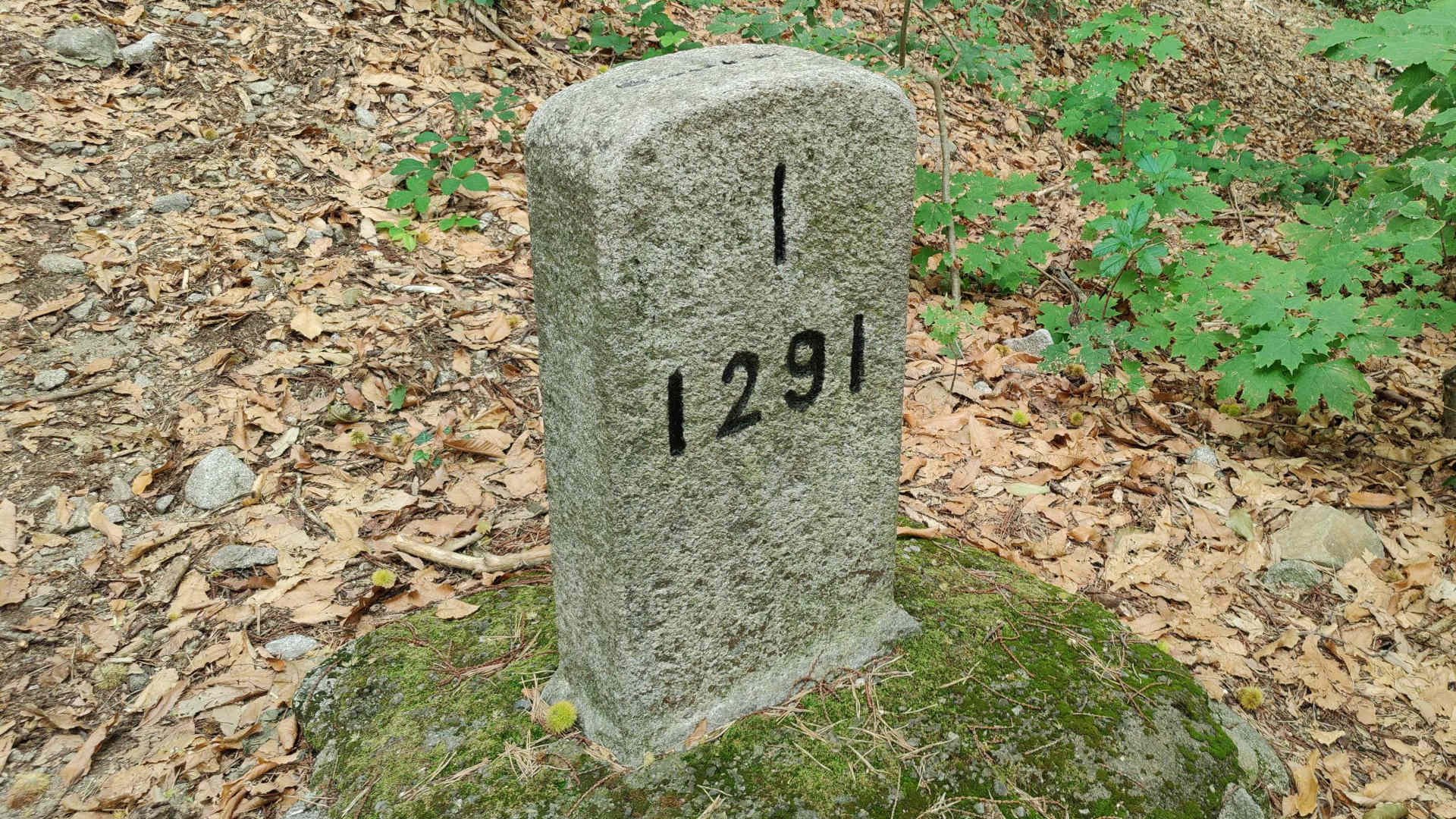
Project ch1291.ch
In recent years, as CEO, I have been increasingly asked whether I am still fit enough to keep up with the ‘fast-paced’ world of IT. The question of succession planning also comes up from time to time. For the sake of transparency, I would like to mention that I turned 60 this year. With this in mind, it is reasonable to assume that the company will be passed on to a new generation in a few years. However, until then, the ArchivistaBox will continue to be developed in its usual form.
Another equally important point is to stay fit. Anyone who spends the whole day practically sitting in front of a computer will have to make time to be active outside of work. For this reason, I occasionally ‘treat’ myself to a few days in nature. And because I turned 60 this year, my ‘birthday gift’ was taking six weeks of vacation. These six weeks were ‘invested’ in the project ch1291.ch.
For those who don’t feel like reading the posts on ch1291.ch, let me just say that this year I hiked around Switzerland in exactly six weeks. I covered 1291 kilometers in the process, which is about 30 kilometers per day. With that in mind, I can confidently say that I still feel fit enough to continue leading this company for the next few years.

Project filminfo.ch
About seven years ago, the ArchivistaBox was adapted to handle audiovisual data. Although currently only a few customers are using this functionality, it is worth noting with pride that the ArchivistaBox is a document management system for all types of data. The ArchivistaBox may even be the only solution that can manage hundreds of terabytes in its standard configuration. The data is synchronized across multiple boxes, and data backup is also not limited by the capacity of a single hard drive.
To thoroughly test the ArchivistaBox, I started collecting films privately a few years ago. This film collection has grown over the past five years to well over 102,000 films, totaling approximately 106,000 hours. Currently, this collection requires about 40 TB of storage. As a byproduct of this work, it has become the largest archive of Swiss films. It currently contains approximately 24,000 films. Of course, these films cannot be “released” for viewing.
But here is where filminfo.ch comes in. Even the directory of these films is unique. Because even in the large international film directory imdb.com, only a few thousand Swiss films are available, and the same situation exists with national institutions that maintain public directories (Institute of Film Studies at the University of Zurich and/or swissfilms.ch). In short, filminfo.ch is currently the largest Swiss film directory.
From a technical point of view, the challenges at this scale include questions such as: how can these collections be automatically synchronized across multiple boxes, how can it be ensured that no faulty films are added to the archive, and how can the films be captured in optimal quality? Based on the private collection, it can be stated that without optimization, the current collection would probably be around 250 to 300 TBytes. And even though the collection is private, Archivista GmbH now has a high level of expertise when it comes to digitally managing audio and video files. This is true even if the ArchivistaBox is not to be used.
Bugs, bugs, bugs
The ch1291.ch and filminfo.ch projects were primarily responsible for the relative “quiet” period here in recent months. These two projects have now been completed. With that in mind, all available resources are now once again dedicated to the ArchivistaBox itself.
Or is it not? The last few months have unfortunately shown that there is currently a veritable flood of security vulnerabilities. Analyzing code with AI models leads to the discovery of vulnerabilities that would hardly ever have been found manually. This is both a curse and a blessing. It’s a curse because the corresponding exploits are also created with AI, and a blessing because it clearly shows that security cannot be achieved at no cost.
Security vulnerabilities need to be addressed. In the current version 2026/X, we have addressed a critical vulnerability that allowed code from virtualized guests in our VirtBox (ArchivistaVM) solution to be transferred to the host, thereby compromising the main computer. Additionally, two critical vulnerabilities in PHP have been discovered, which enable the execution of arbitrary code on computers running PHP-based solutions.
ArchivistaDMS itself is not written in PHP, but in the Perl language. Therefore, an attack via ArchivistaDMS is not possible. ArchivistaERP, on the other hand, is implemented in PHP. Furthermore, PHP is also used for various additional solutions that run on the ArchivistaBox, such as WordPress (this website) or Nextcloud (corresponding installations at customers).
The same principle applies here: releasing a Linux distribution without PHP makes no sense. PHP is simply the scripting language, and it is therefore included as standard on the ArchivistaBox. For ArchivistaBox customers, there are now two options. Customers who only use ArchivistaDMS can explicitly disable ArchivistaERP (if it is not already disabled).
ArchivistaERP can be deactivated via the ArchivistaBox desktop and in the start menu under the ‘ArchivistaBox’ menu item, using the ‘ArchivistaSetup’ entry. When this tool is launched, ArchivistaERP can be deactivated using the ‘ArchivistaERP – System Deactivate’ entry. Alternatively, a simple update to version 2026/X can be applied. In this case, PHP 8.2.35 will be installed. This version resolves the two critical vulnerabilities. With that in mind, happy updating!
P.S.: The community versions of AVMultimedia and AVMultimini are not affected by these vulnerabilities. However, the community versions of the ArchivistaBox are affected. Please understand that we will first update the customer systems, and the community versions of the ArchivistaBox will follow shortly.